

Tutorial
RGB LED Color Mixing!
Apr
RGB Color Mixing Made Easy!
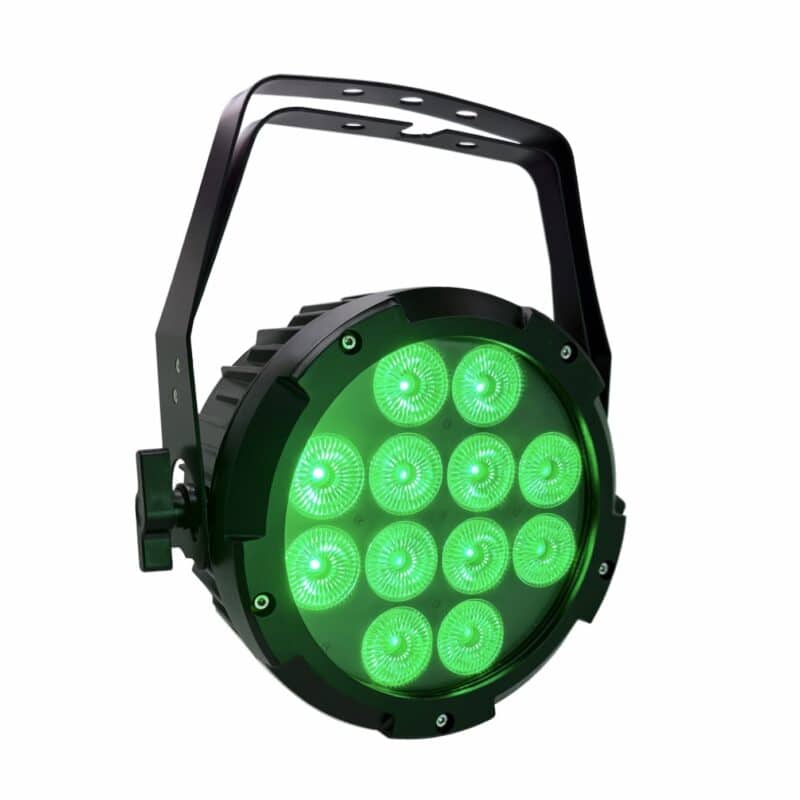
Many LED lights are RGB, which means they use red, green, and blue LEDs to create color. By adjusting the intensity of each of these three colors, you can blend them in different ratios to create thousands of other colors. The good news is that RGB color mixing is easier than it may seem. Watch our video, reference the guide below, or use the color wheel to get started.
Color Mixing Guide
The Basic Principle of Color Mixing
-
Red + Green = Yellow
-
Red + Blue = Magenta
-
Green + Blue = Cyan
-
Red + Green + Blue = White
Most of us learned the basics of color mixing back in elementary school, learning our primary colors and what happens when we mix them: red and blue make purple, yellow and blue make green, and red and yellow make orange. This applies to pigments like paints, dyes, or inks. When it comes to light, however, the primary colors are red, green, and blue, and mixing them produces different results—red and blue make magenta, blue and green make cyan, and green and red make yellow. Another key difference is that mixing all pigment colors creates black, while combining all colors of light produces white.
Unlike pigments or paints that absorb light, LEDs add light together—so the more colors you blend, the brighter and closer to white the result becomes.
How to Mix Colors
RGB color mixing is typically based on a 0–255 scale for each primary color, where 0 means off and 255 means full brightness. These values are listed in this order: Red | Green | Blue. For example, 0 | 0 | 255 means the red and green LEDs are off and the blue LED is at full brightness, producing blue light. Below are some examples of the colors created by different combinations of the three primary-color LEDs.
- White: 255 | 255 | 255 – All colors at full brightness
- Orange: 255 | 90 | 0 – Red at full brightness, green just below halfway, no blue
- Light Blue: 50 | 200 | 255 – Red low, green high, blue at full brightness
- Magenta: 255 | 0 | 255 – Red and blue at full brightness, no green
- Hot Pink: 255 | 25 | 125 – Red high, minimal green, moderate blue
- Yellow: 255 | 255 | 0 – Red and green at full brightness, no blue
- Light Pink: 255 | 130 | 180 – Red high, green and blue around halfway
- Cyan: 0 | 255 | 255 – Green and blue at full brightness, no red
- Purple: 255 | 65 | 255 – Red and blue high, with a touch of green
- Pink Purple: 255 | 50 | 230 – Red high, green low, blue nearly full
- Brown: Too hard—don’t even try. Besides, why would you want to make brown anyway?
Color Wheel Tool
Use the color wheel below to get a general idea of the RGB values needed to create your desired color.
Color Mixing with DMX
DMX is the industry-standard protocol for stage and architectural lighting. RGB color mixing with DMX is fairly straightforward. Each primary color—red, green, and blue—is assigned its own DMX channel, allowing for precise control over intensity and color. You can think of each channel like a separate fader on a lighting console: when the fader is all the way up, the value is 255; when it is all the way down, the value is 0. Using a DMX console or lighting software, you can mix colors, create fades, and transition between scenes with smooth, professional results.
Learn More About DMXWhy Doesn’t My Color Look Right?
If your LED fixture isn’t producing the exact color you expected, that doesn’t necessarily mean you did anything wrong. In real-world lighting, color mixing is affected by more than just the DMX values you enter.
One major factor is the type of LED engine inside the fixture. An RGB fixture can create a wide range of colors, but it often has a harder time producing natural whites, warm ambers, subtle pastels, and some skin-tone-friendly shades. Fixtures with added emitters like Warm White, Amber, or Lime can often create more refined and natural-looking color than a basic RGB fixture.
Just as importantly, not all RGB fixtures produce the same color. Two manufacturers may both sell an RGB light, but that does not mean those lights will match. The exact LEDs used, the balance of red, green, and blue output, LED binning, optics, diffusion, and internal calibration all affect the final result. Because of that, the same DMX values can look different from one fixture to another.
Even the same manufacturer can see small differences over time. LEDs are produced in batches, and slight variations in color and brightness can occur from one batch to another. Better fixtures minimize this through tighter binning and calibration, but small differences can still show up, especially when comparing fixtures side by side.
The surface you are lighting also makes a big difference. A color may look rich and beautiful on a white wall, but look dull, muddy, or uneven on curtains, painted scenery, wood, carpet, or skin. The surrounding environment matters too. Ambient light, nearby colors, haze, and room finishes can all change how a color is perceived.
Brightness is another common factor. Some colors look great at one intensity and noticeably different at another. A deep saturated color at full output may need adjustment when dimmed, and a soft pastel may wash out if the fixture is too bright.
If you are lighting people, video, or live streams, camera settings can also affect what you see. A color that looks balanced in person may appear too cool, too magenta, or too green on camera depending on white balance and exposure.
That is why color recipes should be treated as a starting point, not an exact formula. Use the values as a guide, then fine-tune by eye based on your fixture, your environment, and what you are lighting.
Going Beyond RGB — Adding More LED Colors!
While RGB LEDs can produce thousands of colors, adding a fourth diode unlocks an entirely new range of color possibilities. Whether you’re after truer whites, smoother gradients, or richer tones, four-diode fixtures—like RGBW, RGBA, and RGBL—provide a noticeable leap in color quality and creative flexibility.
RGBWW – Adding Warm White (WW)
The Warm White diode transforms an RGB fixture into an RGBWW, unlocking a broader range of realistic whites and soft tints. Instead of blending red, green, and blue to create a near-white (which often looks cool or pastel), the WW diode produces clean, balanced whites with adjustable color temperatures.
This also enhances how mixed colors appear—pastels look smoother, and scenes feel more natural. RGBWW fixtures are a favorite for house lighting, theaters, and architectural spaces that need both dynamic color and high-quality white light.
•Benefit: Produces natural whites and soft, creamy tones.
•Use Case: Ideal for multipurpose venues needing both color-changing effects and everyday white illumination.
RGBA – Adding Amber (A)
Adding an Amber diode fills the spectral gap between red and green, creating richer warm tones and punchy pastels. It deepens oranges, enhances sunset hues, and allows for smoother transitions through the warm color range.
The result is a lighting palette that feels vibrant, inviting, and emotionally expressive—perfect for stages, restaurants, and event spaces that aim to evoke warmth and atmosphere. RGBA fixtures are especially valued for their ability to render human skin tones more naturally under colored light.
•Benefit: Enhances warm hues and adds depth to pastels.
•Use Case: Perfect for theatrical or hospitality settings where warmth and visual richness are key.
Amber Color Mixing Guide
The following values are given on a 0–255 scale, where 0 means off and 255 means full brightness. They are listed in this order: Red | Green | Blue | Amber.
- White: 255 | 255 | 255 | 50 – All colors full with a touch of amber for warmth
- Warm White: 255 | 200 | 180 | 120 – Balanced mix for natural, incandescent warmth
- Orange: 255 | 80 | 0 | 180 – Red high, green low, strong amber for richness
- Amber: 255 | 100 | 0 | 255 – Red and amber at full, minimal green and no blue
- Light Blue: 40 | 200 | 255 | 0 – Red low, green high, blue at full, no amber
- Magenta: 255 | 0 | 255 | 0 – Red and blue full, no green or amber
- Hot Pink: 255 | 40 | 140 | 20 – Red strong, touch of green and amber, medium blue
- Yellow: 255 | 255 | 0 | 120 – Red and green full, amber adds golden warmth
- Light Pink: 255 | 150 | 180 | 60 – Red high, moderate green and blue, hint of amber
- Cyan: 0 | 255 | 255 | 0 – Green and blue full, no red or amber
- Purple: 255 | 40 | 255 | 0 – Red and blue high, tiny green, no amber
- Pink-Purple: 255 | 60 | 230 | 30 – Red strong, green low, blue high, subtle amber
RGBL – Adding Lime (L)
The lime diode represents a modern evolution in LED color technology. By filling in the space between green and yellow, lime improves the fixture’s luminous output, color rendering, and brightness efficiency.
An RGBL fixture delivers higher CRI (Color Rendering Index) and smoother whites while maintaining vivid color saturation. Lime also enhances pastel tones and makes skin tones and natural materials appear more accurate and lifelike under stage or house lighting.
•Benefit: Increases brightness and improves CRI for more natural, true-to-life colors.
•Use Case: Ideal for studios, houses of worship, or architectural installations requiring accurate color fidelity.
Color Mixing Tutorial Videos
Additional Resources



Why RGBAL Produces Better Color

The Spartan300 RGBAL
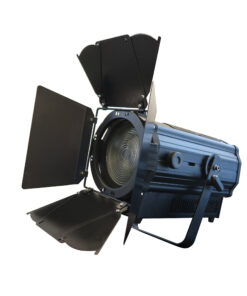
When you need the very best in color production, we recommend our Spartan300 RGBAL LED Fresnel, which combines RGB color mixing with the added benefit of amber and lime LEDs. The Spartan300 RGBAL delivers a soft, even wash of light with a smooth transition from the center to the edge of the beam—providing gentle, uniform illumination across your stage.
Learn More!Auditorium Lighting by Springtree
LED House Lighting
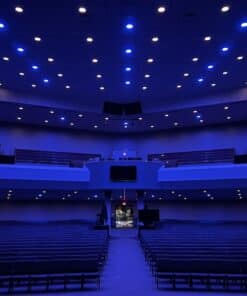
LED House Lighting

LED House Lighting

LED House Lighting
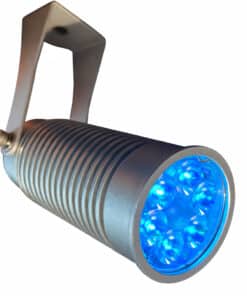
LED House Lighting
Lo-Vo Architectural Lighting
Stage Lighting by Springtree
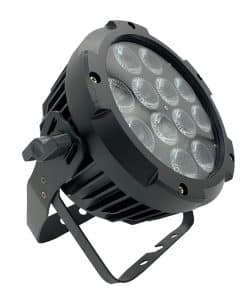
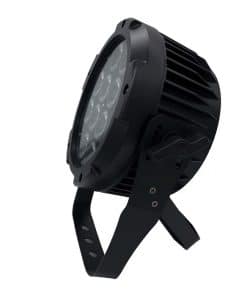
Stage Lighting


Stage Lighting
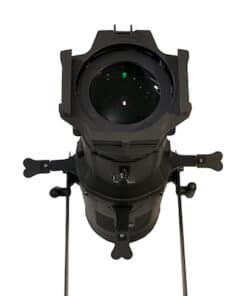
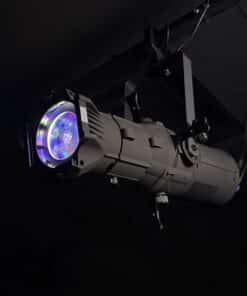
Stage Lighting

Stage Lighting
Stage Lighting
Stage Lighting

Stage Lighting

Stage Lighting
This article on RGB LED color mixing is relevant to readers who are interested in understanding and utilizing the principles of color blending for audio-visual applications.
This is a cool explanation of RGB LEDs!